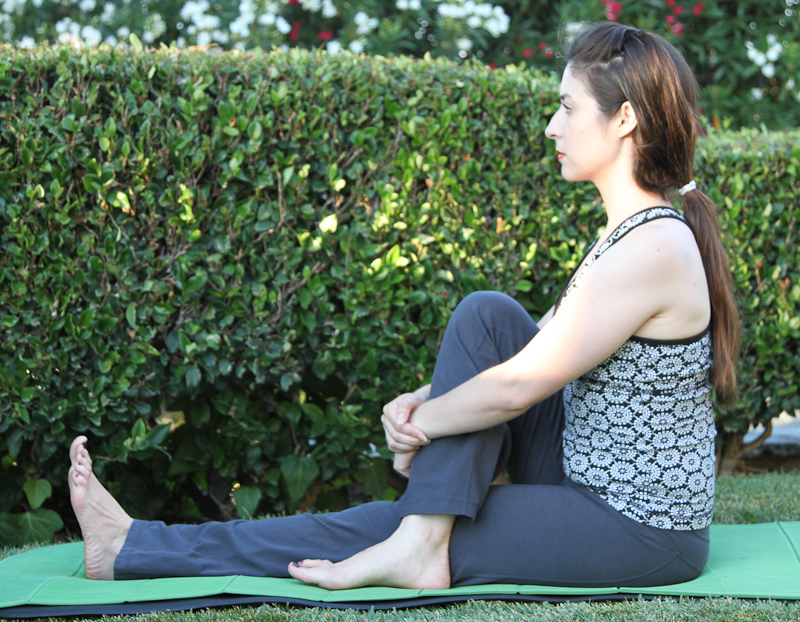
Monday, December 14, 2009

"Emptying the Cup of Self"

Have you ever read the apostle Matthew's account of the disciples who came to Jesus wanting to know which of them "was the greatest in the kingdom of heaven?" Jesus suggested that they must "become as little children" or they wouldn't even enter the kingdom of heaven. There is a striking similarity in the story of the student who came to a teacher to learn Zen. Before the lessons began the teacher suggested that they sit down together for a cup of tea. The teacher poured tea from the pot into the student's cup until the tea was overflowing onto the floor. When the student finally asked why the teacher continued to pour when the cup was obviously full, the teacher smiled and replied, "You come to me like that cup, full of yourself. When you empty your cup, come back to learn." I often wonder if the student was ever able to empty himself enough to return....
Do you remember the abandonment of self with which we approached new things as a child?
We experienced all things with enthusiasm and awe as if we were seeing it for the first time. Early one morning on a family vacation my two-year-old granddaughter, Kaya, was watching me move into a head stand, and immediately she put her little head on the floor and tried to kick her legs up into the air. Of course she was not physically or mentally prepared to support her body weight in an inversion, but she was emotionally ready because there was no fear of failure, only trust that her body and I would be there for her. We can all learn a lesson from little children about absolute trust that releases self-consciousness and fear.
With preparation and practice we can become like children who immediately summon up the courage to go upside-down without a single thought of the fear of falling over backwards in failure. This week's blog describing "Downward-facing Dog Pose" (Adho Mukha Svanasana) serves as instrumental preparation for next week's "Supported Headstand Pose" called Salamba Sirsana. If you don't trust the method that I personally used to overcome these issues of self, set up your yoga mat 8-10 inches from a wall, just in case my method doesn't work for you! Do not attempt inversions if you have high blood pressure, are decidedly overweight, are pregnant, or if you are experiencing very loose stools (diarrhea.)
  • Physically---After warming the muscles with a few "Salutations to the Son" (April 27th, May 4th and 11th blogs), open the shoulders and back by relaxing in the "Wall or L-Hang" described in the August 17th blog for 8-10 smooth and rhythmic breaths. Then with a long exhalation release onto the hands and knees in the "Four-Post Pose" with the hands aligned directly under the shoulders and the knees under the hips. Spread the fingers and toes and align them straight ahead.
  • Inhale to ground into the hands and feet as the tail bone lifts up into an inverted V position called "Downward-facing Dog Pose" or Svanasana. Exhale while pressing into the heels of the hands and feet, yet lifting the inner arches of the hands feet by pressing into the big toes and thumbs. It's almost as if the hands were acting as feet, pressing into the pads of the inner fingers and toes to lift the arches of all four limbs. Use the inhalations to ground and extend through the spine by lifting the pelvic floor, abdominals, as well as the tail bone in a forward tilt of the pelvis while the upper arms rotate externally away from center to broaden through the chest and back. During exhalations the upper thighs may rotate internally toward the center (internal hip rotation) as the leg muscles squeeze in toward the bones.
  • Remain in "Downward-facing Dog Pose" for 4-6 breaths before slowly releasing one forearm at a time onto the floor with a long exhalation. Inhale and press into the forearms as well as the heels of the feet, and exhale to lengthen the spine by drawing the pelvic floor and abdominal muscles in and upward. In this position called "Dolphin Pose" the head is not released onto the floor, but the gaze is back toward the toes.
  • Mentally---Experiment with strong and extended exhalations called Kapalabhati breaths as you count 8-10 deep breaths in "Dolphin Pose." Focus the attention on broadening the tops of the shoulder blades as the shoulders rotate externally away from center to open and expand the chest three-dimensionally. If the mind wanders into a place of fear at what's coming next, return all thoughts to the lovely experience of natural but smooth nose-breathing. Then release into another humble position called "Child's Pose" (January 10th blog) with a long, sighing exhalation before resting in "Corpse Pose" (described in the January 24th blog.)
  • Spiritually---It's probably not a coincidence that dogs and dolphins are easily trained to be obedient to a master. They are capable of becoming so closely attached and connected to their trainer that obedience is a natural outcome, often at the abandonment of self interests. What great spiritual exercise for humans! While practicing the two poses (asanas) in this week's blog, strive to empty your overflowing "cup of self" and become more trusting and childlike in order experience the wonder of surrendered positions like "Downward-facing Dog" and "Dolphin."
Ponder the words of wisdom spoken by the Master Teacher, Jesus Christ, when He answered the ego-related question posed by His disciples:
"At the same time came the disciples unto Jesus saying, 'Who is the greatest in the kingdom of heaven?' And Jesus called a little child unto Him, and set him in the midst of them, and said, 'Except ye be converted, and become as little children, ye shall not enter into the kingdom of heaven. Whosoever therefore shall humble himself as this little child, the same is greatest in the kingdom of heaven.' " (Matthew 18: 1-4, KJV)

Practice seeing things as if you were seeing or experiencing them for the first time, as if you were a beginner! plf

Monday, December 7, 2009

"The Gift of Chair Yoga"

The use of a chair for some yoga postures (asanas) is somewhat like using a crutch while a broken leg heals. Usually it doesn't have to be a permanent condition. Props are aids that allow the student to more fully experience the desired alignment, and therefore the benefits of the pose until the circumstances change. But for the chronically overweight or handicapped the chair often means the difference between experiencing the benefits of the position to some degree, or not at all!
The assistance of a chair to support the body weight is a pleasurable gift, even to those who don't truly need it but simply want to focus attention on the alignment or breathing rather than struggling to support all of their body weight. I remember the first time I experienced the ease of flowing from "Warrior I" to Warrior II" on a chair during the course of my certification to become a yoga instructor. There were actually three different all-day workshops that involved the use of a chair---"Yoga for Seniors," "Prenatal Yoga" and "Yoga for Multiple Sclerosis." "Gentle Yoga for Seniors" gave the elderly
the security of a chair beneath them to assist weak muscles and joints. During my prenatal certification we learned how to situate students in their third trimester, or even earlier depending on the rate of weight gain, on a chair to find greater ease and comfort in the standing postures. Actual patients with MS from the UCLA Medical Center came to our instructional workshop and we practiced teaching the benefits of twists performed in a wheelchair or "walker." What joy to share the experiences of yoga with those who otherwise would, or could not participate!
Today's blog will focus on the use of a chair as a prop in order to experience last week's challenging position of "Upward Incline Plank" (Purvottanasana) that requires lifting all of the body weight into a gentle back bend. This week is dedicated to those students who want to appreciate the opening of the front body to counter the majority of time that we spend in seated or forward bending positions. Think about the great percentage of our time that we spend sitting to drive or ride in any vehicle, sitting to read, watch television or work on a computer, sitting, sitting, sitting, all the while shortening the muscles in the front of the body, and weakening all of the joints and muscles! With the aid of a chair most students can explore the opening of the front body by trying this week's position---"Supported Incline Plank Pose" or Salamba Purvottanasana. This
"supported pose" will benefit the entire body by first increasing the circulation in the lower limbs with a few "flex and point" breath-synchronized flows. You can even be practiced at the office or on an airplane!
  • Physically---First, be sure that your chair is a reliable support device by grounding it securely on a carpet, or be sure the lock is secured on the walker or wheel chair.to prevent this prop from sliding out from under your buttocks just when you need it the most! Now you can safely sit tall on the front edge of the chair, walker or ottoman with the heels of the hands pressing into the seat on each side of the hips and fingers draped over the edge (thumbs pointing forward), and extend both legs straight out from the hips in front. Inhale deeply while grounding the sit bones into the chair and extending upward through the crown of the head as the legs extend through the flexed heels of both feet. At the top of the inhalation, lift the pelvic floor and abdominal muscles and engage all the muscles in both legs, hugging muscle to bone for support and thereby increasing the circulation of blood and lymphatic fluids. During a long exhalation, press the tail bone down and forward in a reverse tilt of the pelvic basin as all ten toes point (especially the two "big toes") and press them evenly into the floor in order to rotate the legs internally toward the center. At the end of the exhalation, allow the chin to slowly lower toward the lifted chest as the shoulders relax and roll down the back of the body.
  • When you feel ready to explore the effort of the full "Supported Incline Plank Pose" just slide both hands back along the edge toward the back of the chair, about 8-10 inches, as you inhale. Be sure to engage your core muscles at the top of the inhalation for the necessary spinal support, and then exhale while pressing into both hands and feet to lift the hips as high above the edge of the chair as possible. If possible, release the head slowly back to rest on the chair back, and then press the shoulders down and away from the ears as the tail bone is pressing down toward the feet. After several counted breaths---it doesn't matter how many at first---exhale the buttocks slowly onto the chair, making sure that it has remained stable, and then fold forward into a relaxed seated forward bend as you slide the tail bone toward the back of the chair.
  • Mentally---Keep the mind focused on small movements like the internal lifting of muscles and the three-dimensional expansion of the chest during each victorious ujjayi breath. Release all self-judgments about how high the hips have lifted from the support! Remain focused on maintaining an easy and smooth rhythm of breathing that is coordinated with the lifting and opening of the front body. Extend and expand as you inhale energy (prana) in and up through the body. Smile to relax the facial muscles as you exhale and release all expectations and judgments. Bring your awareness into the gift of having a prop beneath your body to assist and make possible this experience of opening the heart and baring the throat. Be vulnerable and enjoy it!
  • Spiritually---When using any prop for assistance to hold or sustain yoga positions, remember that it is necessary and helpful for everyone to lean on something or someone during challenging times. Let go of your ego to experience gratitude for the support provided, and use it to become strong with regular practice called abhyasa!
"Trust in the Lord with all thine heart; and lean not unto thine own understanding. In all thy ways acknowledge Him, and He shall direct thy paths. Be not wise in thine own eyes; fear the Lord, and depart from evil. It shall be health to thy navel, and marrow to they bones." (Proverbs 3:5-8, KJV)

My prayer is that every single human being might experience the joy of releasing into the strong and trustworthy hands of the Lord by yoking/yoga-ing with Him as your daily Guru! plf

Monday, November 30, 2009

"Strong Yet Vulnerable"

Why do some people (especially men) think that strength and vulnerability cannot coexist? Haven't they heard of the expression "steel velvet" from Aubrey Andelin's book published in 2006, entitled Man of Steel and Velvet: A Guide to Masculine Development. This book would be a wonderful Christmas gift for every father and son, or even daughter and mother, because it describes the intriguing picture of a man who has achieved masculine fulfillment with the combined traits of the firmness of steel and the gentleness of velvet. These rare men command admiration, devotion and respect by assuming their rightful position as the head of the household with "strong minds, kind hearts and willing hands." No bragging intended here, but I have been blessed with just such a man in my husband of 41 years, James S. Fraser. A heartfelt "Thank you" to God and his parents!
Every time I practice this week's pose, called "Upward Plank Pose" or Purvottanasana, it makes me feel "strong, yet vulnerable" because I'm supporting the entire weight of my body, but with my heart and throat bared and facing upward. This position in the animal kingdom indicates submission to a higher authority. As "women of God" we are to submit to our husbands, who in turn are submitting to God's authority, and therefore, these "steel velvet" men treat us as they would themselves. Wouldn't it be a better world if this were always the case....
  • Physically---Warm up to prepare for "Upward Plank Pose" by practicing the pose described in last week's blog---"Four-Footed Table Pose"---because it will help to develop the required strength in the arms and legs in order to support the weight of the entire body without sagging in the hips and lower back. If this is too difficult, then try losing weight, along with a regular practice of "Staff Pose" (June 22nd blog) as the hands are pressed into blocks aligned just under the shoulders in order to lift the weight of the body. Also practice the "Two-Legged Table Pose" which will cultivate strength in the back of the thighs (hamstrings) to support the hips without swaying the back. Do not attempt these poses if you are pregnant or severely overweight!
  • Begin by sitting in "Staff Pose" on a flat and level surface as you practice small movements coordinated with the breath. While inhaling, ground into the sit bones and extend through the spine and the heels of both flexed feet, toes pointing upward and the back of the knees pressing down into the floor. Then engage the pelvic floor and abdominal muscles for core support before exhaling as both feet point forward and the legs rotate internally toward the center. Practice at least 5-6 rounds of flexing and then pointing the feet in sync with the breath before attempting to lift the entire body up into a straight "Upward Plank Pose."
  • With the palms of the hands on the floor by the hips, fingers facing forward, inhale while bending the knees, attempting to press the soles and heels of both feet onto the floor. While exhaling engage the pelvic floor, abdominals and the muscles in the back of the legs, and then press into the hands and feet to lift the hips and entire body upward in a straight "Upward Plank Pose." Some people may need to rotate the upper arms externally (away from center) while others may rotate internally in order to fully extend both elbows until the arms are perpendicular to the floor. With each inhalation the upper rib cage is expanding through the back and sides, and then the hips are lifting upward during exhalations as the obliques and psoas across the groin are working eccentrically (while lengthened) to keep the lower back from sagging into a swayback position. Although this pose is considered to be a basic backbending and arm supported pose, it will require regular practice (abyhasa) to develop the muscle strength and length needed to hold the position for one minute (6-10 kapalabhati breaths with vigorous exhalations, depending upon the rate). Once the gaze point leaves the navel, the eyes may begin to focus above or behind the head, depending upon the condition of the neck muscles to work eccentrically.
  • Mentally---If the chest is parallel to the ground, the arms are perpendicular to the floor and the gaze is upward or behind, the mind is now free to focus the attention on the rhythm of the breath and the strength of the body. Feel the back of the thighs and calves lifting as the front of the groin (psoas) extends and rotates toward the center (internal rotation.) Focus on keeping the breathing movements in the upper portion of the chest to deepen the extension in the upper back and across the entire front body.
  • Spiritually---Although your heart and neck are opened, bare and vulnerable, you are supporting the weight of your own body, if even for only a breath or two at first! As you look upward, feeling strong and vulnerable at the same time, remind yourself of the hierarchy of power described by Paul in his letter to the church in Ephesus: "Wives, submit yourselves unto your own husbands, as unto the Lord. For the husband is the head of the wife, even as Christ is the head of the church; and He is the saviour of the body....Husbands, love your wives, even as Christ also loved the church, and gave himself for it;...So ought men to love their wives as their own bodies. He that loveth his wife, loveth himself. For no man ever yet hated his own flesh; but nourisheth and cherisheth it, even as the Lord the church....Nevertheless, let every one of you in particular so love his wife even as himself; and the wife see that she reverence her husband." (Ephesians 5: 22-33, KJV)
Yes, this is a tough challenge for today's challenged women who must work to pay bills, and a tough pose to remind us of the challenge. Remember Shawn Phillips words "small steps make a distance." Take a step! plf

Monday, November 23, 2009

"Growing in Gratitude"

The American tradition of celebrating "Thanksgiving" is a pure and true "holy-day" because the focus is on the experience of gratitude. We gather together with family and friends, even inviting those who have no family or friends, and we are thankful for the companionship, the harvest and all the blessings of the earth. The content of the meal doesn't really matter, but rather the content (yes, an intentional pun!) of the heart.
As one of my refrigerator magnets reads, "Gratitude is the soil in which joy thrives." I believe that the experience of happiness and true joy germinates and continues to be nurtured by an awareness of all the blessings that have been showered upon us. These gifts are not necessarily material possessions, but rather an appreciation of whatever life serves us because we can learn from the challenges more than from the "things" in life. Why does it take a week of rain, sleet and snow before we appreciate the sunshine, or a stuffy nose and sore throat to be grateful for every breath we breathe with ease? This season let's all try to cultivate "an attitude of gratitude" in the midst of whatever is placed on our table---peas or pies, pleasure or pain. To open our hearts to this positive attitude let's practice the heart and hip opening yoga posture called "Four-Footed Table Pose" or Chatus Pada Pitham in Sanskrit, unless you are pregnant.
  • Physically---Tune into your breath while sitting tall in "Staff Pose" (Dandasana, described in the June 22nd blog) on a flat and level area, legs extended straight out from the hips and hands pressing gently into the floor beside the hips, fingers spread wide like a starfish and pointing forward. With each inhalation ground firmly into the "sit bones" at the base of the hips and into the heels of the hands and all ten fingers as the crown of the head is lifted upward to create spinal extension. During the exhalations allow the shoulders to roll down the back as the shoulder blades remain broad at the top and tucked in toward the spine at the bottom. Bring a slight smile to the corners of your mouth as you anticipate opening your heart to gratitude for all things, great and small.
  • After several minutes of establishing a smooth and rhythmic pattern to the breath, inhale while sliding the hands with spread fingers back behind the hips, shoulder-width apart, and then slide the feet in toward the hips until the knees are bending at right angles. Exhale to press firmly into all four limbs (hands and feet) while lifting the pelvic floor and abdominal muscles (the mula bandha and uddiyana bandha) as the torso lifts up to form a flat, tabletop surface called "Four-Footed Table Pose." Keep the shoulder blades rotating downward as the abdominals and quadriceps across the top of the thighs work to extend the knees directly over the ankles, and the tail bone extends neutrally toward the bended knees. If there is no neck injury the base of the skull may be released slowly onto the shelf of muscles in the upper back called the trapezius as the gaze shifts upward (urdhva) or behind the head to the "third eye drishti" called naitrayoh ma dyai in Sanskrit. If there is an issue with the cervical spine (neck) keep the gaze steady and straight ahead across the torso at the navel called the nabi chakra. Attempt to lift the back body as the front body is opened and extended with each breath. Remain for 8-10 kapalabhati breaths (rigorous exhalations with the chin lock engaged) or hold the pose for as many breaths as possible to maintain a level tabletop.
  • Mentally---Keep the mind focused while holding "Four-Footed Table Pose" by experimenting alternately with "belly breathing" and then "chest breathing." Attempt to determine which style of breathing helps to stabilize a level tabletop and which assists in opening the upper ribs three-dimensionally. Stay with your body and breath in the pose by feeling grateful for the beneficial effects of strengthening, lengthening and opening.
  • Spiritually---There is no denying that it takes constant and regular practice (abhyasa) to find the good in everything. Some days we fail and sink into misery and self pity, but then we can "pick ourselves up, dust ourselves off and start all over again" as the song goes. We can choose to be grateful for the opportunity that life gives us to start all over again. So if this week's physical posture, "Four-Footed Table Pose" is too difficult to bring your body into a level position for now, be content that you can lift your butt off the ground at all! Keep practicing and count the number of breaths that you can hold the lift, no matter how high or low, and maybe in time you'll be able to increase the duration of the lift because your practice will develop the necessary strength and concentration. Be grateful for where you are!
  • In the wise words of the apostle Paul, who learned to be content even while imprisoned in Rome, "Give thanks always for all things...." (Ephesians 5:20, KJV)
And if all else fails, pray for a grateful heart that is open to seeing the good in everything. Be joyful by choice this Thanksgiving, and share your joy! Thanks for reading all the way to the end of my blogs. Hope they help! plf

Monday, November 16, 2009

"Opening the Upper Body"

There's an important expression used by yoga instructors that cautions, "You only do what you can do." In other words, when attempting to complete the full version of any pose we never force the body to go beyond what it is ready to do. In order to sit in the full version of "Cow-Face Pose" (Gomukhasana) not only must the hip joints be ready to externally rotate and relax, but the shoulders, shoulder blades and arms are working to rotate in opposing directions for the upper body portion of this intermediate pose. But don't be afraid to try the full pose in stages because the expansion experienced in the hip and shoulder joints can be blissful.
With regular and constant practice (abhyasa) the hip joints will eventually release in full external rotation (away from center) enough to sit upright with the knees stacked over one another so that they resemble the narrow portion of a cow's face. Then it's time to open the upper body to form the cow's ears (one pointing upward and one downward). Okay, I admit that this image may challenge your imagination, but go with me on this. The arm position for Gomukhasana involves all those tense muscles that tighten when driving or working on the computer, or even chopping and dicing over a kitchen counter. Students who are new to this shoulder and chest-opening arm position are advised to use a belt or a strap held in the hand of the upper arm to avoid over-stretching the shoulder joint. The full version of "Cow-Face Pose" is safe for prenatal students with the use of a strap to avoid over-stretching the area across the abdomen.
  • Physically---Once the leg position for "Cow-Face Pose" (See last week's blog.) has become comfortable enough not to be a distraction, the upper portion of the body is ready to open and relax. If the bottom portion of this pose remains too uncomfortable, you can just practice the arm and shoulder opening in a comfortable seated position such as "Adept's Pose" or "Staff Pose", or even while standing in "Mountain Pose." Search my previous blogs for descriptions of these positions.
  • Begin by inhaling the arms straight above the head while grounding downward to create extension through the spine. At the top of the breath bend both elbows and release the right hand to the left elbow, drawing the flexed left elbow back behind the left ear until the resistance is felt in the back of the left upper arm (tricep muscle) and the left shoulder blade (scapula) opens to release externally with the softening of the left back muscles (rhomboids and latissimus.dorsi.) The upper left elbow is pointing upward when the right knee is on top of the left knee in the leg position, and vice versa. Remain here for 3-5 breaths to experience the external rotation in the left arm and shoulder joint before adding the bottom arm.
  • If this is the first time you've tried this arm and shoulder stretch place a belt or strap in the upper left hand to be held firmly with the fingers aligned along the upper spine. Then inhale the right arm straight out to the side at shoulder height and rotate the right shoulder joint internally (toward center) as the right elbow bends. During the exhalation, roll the right hand, palm facing outward, up the center of the spine as you feel the muscles in the upper right back (subscapularis and posterior deltoid) lengthen enough to reach the fingers of the upper hand, OR the strap held in the upper hand. Remain in this shoulder-opening position for 8-10 breaths, directing each breath into the chest and upper back in order to intensify the stretch in all of the connective tissue. Inhale deeply to stretch the top elbow upward before exhaling to slowly release the grip that binds the opposing rotations.
  • First reverse the lower leg position for "Cow Face Pose" as described in last week's blog before inhaling the arms to reverse upper body arm position. If the left knee is now stacked on top of the right knee then the right elbow will be flexed behind the right ear and the left arm will slide up the back of the spine to reach the right hand OR a strap now held in the right hand. Always move slowly and cautiously into this upper body stretch to avoid overmobilizing the shoulder joints and remain long enough to experience the opening and release of the upper back, shoulder and arm muscles.
  • Mentally---With the intention to explore and discover any tension held in the upper body, rather than strike a perfect pose, it will be beneficial to practice truthfulness (satya) when approaching the upper body portion of Gomukhasana. back of the arms (triceps) or in the muscles between the shoulder blades (scapulae) called subscapularis rhomboids. Focus the attention on maintaining a smooth and rhythmic breathing pattern, especially to expand three-dimensionally through the rib cage on each inhalation as the arm, back and shoulder muscles work eccentrically while lengthening.
  • Spiritually---If the flexed elbows represent each of the cow's ears in this "Cow-Face Pose"--- one perked and attentively pointing upward with the other relaxed and grounding downward--- this can be a wonderful expression of the battle to find balance between meeting the needs of opposing forces. We aim to strike a harmonious balance between our heavenly desires and our earthly needs. The upper ear or body can represent heaven within us and the lower ear or body can easily be seen as a grasping of earthly pleasures that can destroy and lead to hell on earth. My parents often preached their philosophy, "Don't be so earthly minded that you're no heavenly good, nor so heavenly minded that you're no earthly good." We live in both worlds, but as the philosopher Seneca, the younger said, "You cannot escape necessities, but you can overcome them." Be mindfully aware of all opposing forces.
May you find balance in your efforts to overcome the downward pull that prevents you from becoming all that God intends for you....plf

Thursday, November 12, 2009

"Better Late than Never"

Yes, I confess that this week's blog is late! But, "better late than never," right? Last weekend my husband and I drove up to the Sacramento area to visit with my 87-year-old mother, and to clean her apartment. On the way home yesterday as we were driving south on the 101 through the heart of the central coastal area, I noticed sparse herds of "California happy cows" grazing on grassy hillsides dotted with live oak trees and traced with switchback paths worn by years of travel. My mind drifted off to the "happy place" where I experience the Lord's presence when I practice yoking with Him early every morning. After sitting in the twisting pose "Half Lord of the Fishes" described in last week's blog, I often move into a counterpose to open my hips (and heart) with an external rotation in a variation of the position called "Cow-Face Pose" or Gomukhasana in Sanskrit. This hip-opener can be practiced safely by prenatal students with great benefits by moving mindfully into the position, but without the twisting posture from last week.
  • Physically---Begin the leg action of "Cow-Face Pose" (Gomukhasana) by sitting in the center of a flat and level area (or on a yoga "sticky mat") with both knees bent and the right foot just to the left of the left hip and the left foot placed just to the right of the right thigh. Inhale while lifting both arms upward to ground both sit bones at the base of the hips and the tail bone into the earth as the energy flows up through the torso and helps to extend the spine in an upward motion. As the exhalation begins to move down and out of the torso release the right hand to the right inner thigh and the left hand to the left inner thigh to gently encourage an external (away from center) hip rotation in both upper thighs, using the heels of each hand on the inner thighs and then releasing each flexed foot onto its outer edge.
  • Next, inhale the torso forward as the tail bone lifts in a forward tilt of the pelvic basin, and then walk the hands forward until they align directly under the shoulders in a variation of "Cat and Cow Pose." Look up, tuck the toes under the heels, and stretch the tail bone up and away from the lifted chest. Then look back down to see that the left knee is stacked directly in front of the right knee, but be sure to keep both feet flexed to prevent any excess torque and strain in the knee joints! While beginning the exhalation draw up the pelvic floor and abdominal muscles to round the spine like a cat before releasing back onto the sit bones and sliding the hands onto the instep of each foot. If the knees are higher than the hips (indicating very tight hip flexors) place a folded blanket or pillow under the hips to raise them and release pressure on the very vulnerable semi-flexed knees. With each slow and mindful exhalation release the chin toward the lifted chest and the weight of the torso onto the inner left thigh and knee. Use the body weight to gently encourage the hip flexors to soften and expand in this intermediate hip opener for a minimum of 8-10 slow and rhythmic breaths. (We'll add the arm position for the full version of "Cow-Face Pose" in next week's blog.)
  • To reverse the position of the legs for this "Cow-Face Pose" variation to the opposite side, inhale forward onto the balls of each foot as the hips are lifted and begin to walk the hands in a clockwise direction 360 degrees to the right, pivoting on the balls of the feet until the right bended knee is now stacked in front of the left knee and the hands are on the ground directly under the shoulders. Inhale and look up as the toes tuck under the heels of the feet before exhaling onto the sit bones. Now release the torso onto the inner thighs and knees for 8-10 slow and relaxed breaths in this forward version of "Cow-Face Pose" before we add the shoulder openers next week.
  • Mentally---By focusing the attention on the release of the abdominal wall with each "belly breath" inhalation, the pelvic floor and hip joints will begin to soften and relax sooner. Remember your Creator as the source of every breath you take. Be sure to let out all doubts while extending the duration of each exhalation as the weight of the upper body releases slowly onto the legs and encourages the hips to open gradually. Move into "Cow-Face Pose" with the intent to soften your hips and your heart.
  • Spiritually---Ancient civilizations believe that there is a direct correlation between the hips and the heart. If this is the case, time spent yoking with God while sitting in hip opening postures will greatly soften the heart of the practitioner. I claim God's promise in the Book of Ezekiel as I pray daily for those who have hardened their hearts to the God of the universe. I am encouraged to know that the time spent alone with God will accomplish this opening process. Give God the time and the attention necessary to do the softening.
"A new heart also will I give you, and a new spirit will I put within you; and I will take away the stony heart out of your flesh, and I will give you an heart of flesh. and I will put my spirit within within you and cause you to walk in my statutes, and ye shall keep my judgments, and do them."
(Ezekiel 36:26-27, KJV)

"For God maketh my heart soft...." ( Job 23:16, KJV) May He soften your heart and your hips....plf

Monday, November 2, 2009

"What's in Your Bait Box?"

Preparation for the twist to the Right first...

Right ascending colon compression

"Half Lord of the Fishes Pose" to the Left or
 Ardha Matseyendrasana

"Half Lord of the Fishes" twisting Left
Exactly what did Jesus mean when he saw two brothers, Peter and Andrew, fishing in the Sea of Galilee and said to them, "Follow me and I will make you fishers of men." If Jesus was talking about the process of catching the attention of men the way that bait catches the attention of the fish, does any and everything work? If we put a live worm on a hook to catch a rainbow trout in a mountain stream, we probably won't get much attention because that trout is looking for flies that have just hatched. So our bait box better contain a few "dry flies" like a "Parachute Adams" that will lure the trout we're trying to catch. A sense of the appropriate bait seems most effective.
It's helpful to be mindful of this principle of using specific lures that are
appropriate to catch the attention of specific creatures when trying to attract "followers" for a blog. So did I catch any fishermen this week? Yoga has become more mainstream over the past ten years that I've been teaching and so it's been easier to catch the attention of students and then redirect them into a relationship with their Creator. I pray that I'm becoming a more effective "fisher of men." Think about this as you explore this week's twisting yoga pose called "Half Lord of the Fishes" or Ardha Matsyendrasana. However, do not attempt this intense twisting posture if you are pregnant or have herniated discs!

  • Physically---It's best to enter any twisting posture after a few warm-up rounds of "Salutations to the Son" or at least several rounds of the lateral stretches described in last week's blog. Gentle warm-up twists can even be performed while sitting in "Adept's Pose," twisting on an exhalation first to the right after lifting and lengthening the spine on inhalations, and then to the left. (Notice a pattern here? I usually attempt to create some continuity from week to week so that "followers" can link the postures together.) Once all parts of the torso are warmed up and stretched out, sit on a fairly flat and level surface and bend the left knee to bring the left foot under the buttocks. The heel of the left foot is directly under the left "sit bone" (base of the hip bone) while the right "sit bone" rests in the arch of the left foot. If this is too uncomfortable for beginners, please modify the position and place the left flexed foot at the base of the perineum, as in "Adept's Pose." A modified version of this twist can also be performed while seated in a padded chair without arms by sitting on the left foot first.
  • Begin "Half Lord of the Fishes Pose" (as all twisting postures) with an inhalation while grounding the sit bones to lift and extend the spine, and then bend the right knee and place the right foot just outside the left thigh as close to the hip as possible. Exhale while hugging the right bent knee into the right side of the abdomen, using both arms at first to create healthy abdominal compression. Remain in this transitional phase of the pose for several breaths to relax the joints before stabilizing the hips and lower lumbar back. Then, twisting like a spiral staircase from the base upward, inhale while pressing the right hand behind the right hip to ground and lift the pelvic floor and abdominal muscles (the mula and uddiyana bandhas) in order to support the lower spine. At first it's important to enter this intense spinal twist without using the leverage of the arms. Never force the spine into a deeper twist!
  • Then slowly place the left bent elbow outside of the right bent knee with the palm facing to the right and exhale to look over the right shoulder. With each inhalation lift and extend through the torso so that there is healthy space between each vertebrae, never sacrificing extension for deep flexion. Keep the lower body, especially the hips, as a stable base for this twist and use each exhalation to explore and deepen the twist by gradually deepening the lower abdominal contractions (the bandhas.) Remain in your deepest version of the twist for 3-5 breaths, and then slowly relax the core muscles on an inhalation to come back to center. Exhale while switching to place the right foot under the sit bones or at the base of the perineum and hug the left bent knee into the abdomen for several transitional breaths. Proceed with caution as you lift, lengthen and lock the bandhas twisting to the left without the leverage of the arms at first. Once you're experiencing your deepest version of this twist to the left, remain for 3-5 mindful breaths before inhaling back to center.
  • Mentally---The dynamics of belly versus chest breathing can be explored effectively in this intense seated twisting pose as long as the attention is completely focused on the coordination of internal engaging and releasing of muscles in sync with the breathing. At the beginning it's easier to "belly breathe" by relaxing the abdominals at the onset of each inhalation, and then engage the side body by lifting the "flying up locks" in the waist area. Once the tension in the lower abdomen and ribs is released, this area can then be stabilized at the beginning of each inhalation by engaging the locks (bandhas) in order to experience "chest breathing" as the diaphragm action moves into the rib cage. This stable base with an active upper body greatly intensifies the rotation in the spine so it must be done gradually and mindfully. The twist on each side should begin with relaxed "belly breathing" and then progress to deepen the intensity by engaging lower abdominal contractions and maintaining these "root locks," even while initiating the next inhalation in order to experience "chest breathing." Since all parts of the torso are actively engaged to twist and look over the shoulder, it's crucial to balance the action throughout the spine by mobilizing all muscles in the torso from the waist upward.
  • If all this is too much to put together for beginning yoga students, try not to become discouraged! This is the time to realize the importance of studying the complexities of yoga under the supervision of an experienced and certified yoga instructor. Do your homework and research your teacher's background.
  • Spiritually---While experiencing this intense twist that massages all of the lower and upper abdominal organs, remember that yoga is simply a technical tool to teach a physical and mental discipline that relieves suffering. The real point to teach you to become disciplined spiritually by connecting you in a close relationship with your God. If yoga is the bait to lure you into spending quiet time alone, then don't forget to real in the true prize by connecting to your Creator, giving Him your undivided attention and gratitude while you practice.
So get fishing, but don't forget to use the appropriate bait! plf